Description
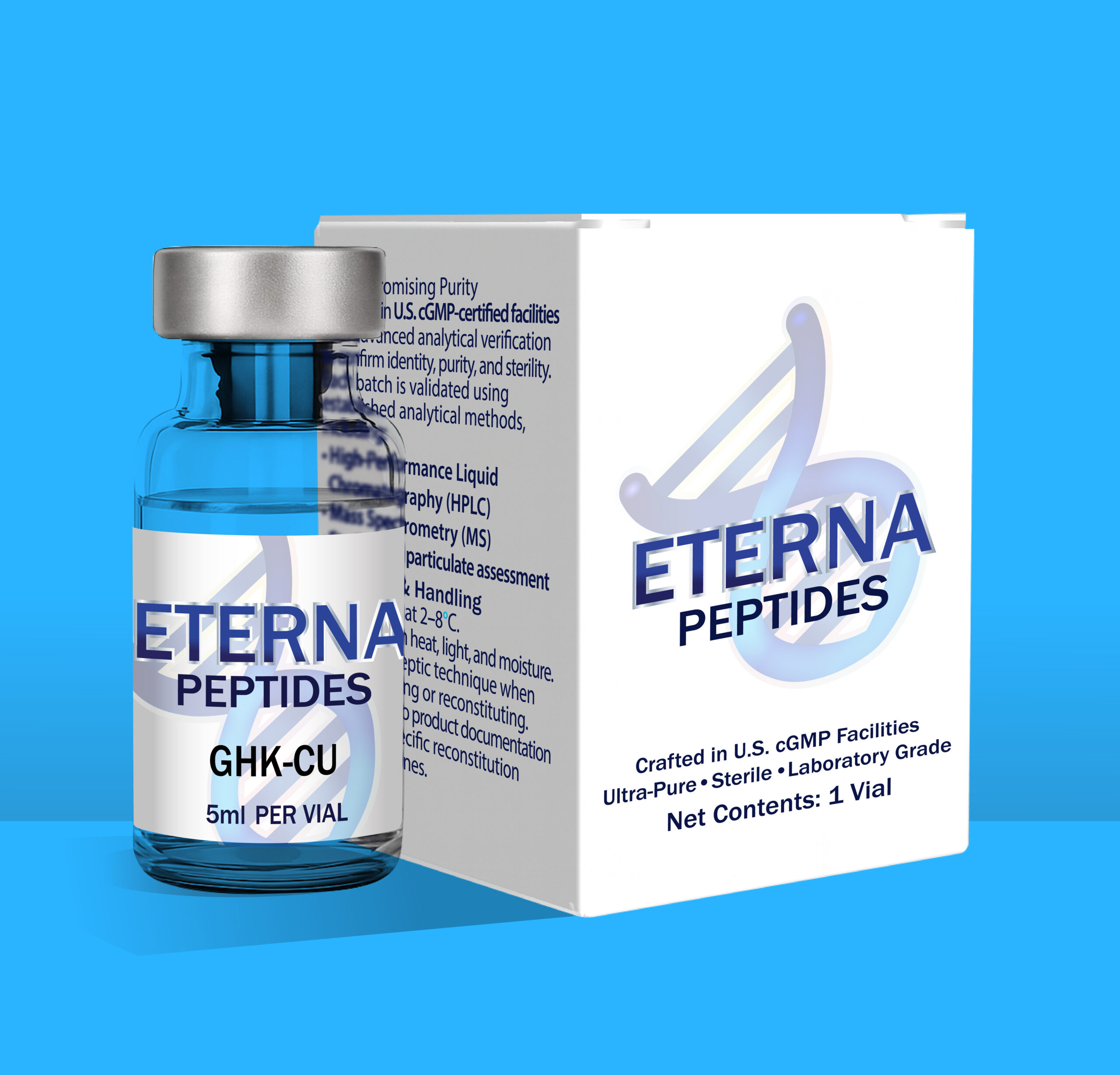
GHK‑Cu (Copper Tripeptide-1, Prezatide Copper) – is the copper(II) complex of the endogenous tripeptide glycyl‑L‑histidyl‑L‑lysine (GHK). First isolated from human plasma, the complex forms spontaneously due to GHK’s high affinity for Cu²⁺. GHK‑Cu has been investigated for roles in wound repair, dermal remodeling, hair biology, anti‑inflammatory and antioxidant signaling, and extracellular‑matrix (ECM) modulation in skin and connective tissues.
Chemical Structure / Identifiers
| Property |
Detail |
| Peptide Sequence (GHK) |
Gly‑His‑Lys |
| Complex |
GHK chelate with Cu²⁺ (copper(II)) |
| Molecular Formula (GHK‑Cu) |
C14H24CuN6O4 |
| Molecular Weight (GHK‑Cu) |
≈ 403.9 g/mol |
| CAS Number |
49557‑75‑7 (GHK‑Cu) |
| PubChem CID |
378611 (Cu‑GHK) |
| INCI / Synonyms |
Copper Tripeptide‑1; Prezatide copper; GHK‑Cu |
Primary Research Focus
• Wound healing and dermal remodeling: stimulates collagen, elastin, and glycosaminoglycan synthesis; modulates MMPs/TIMPs; promotes angiogenesis in models.
• Anti‑inflammatory and antioxidant actions: reduces pro‑inflammatory cytokines; supports antioxidant gene programs; may protect against oxidative injury.
• Hair and follicle biology: investigated for effects on hair growth and follicular health in preclinical and small clinical studies.
• Copper transport/signaling: proposed role in regulated cellular copper uptake and delivery to cuproenzymes.
Safety / Limitations
• Most evidence is preclinical, cosmetic, or small human studies; large, well‑controlled randomized trials are limited.
• Topical tolerability generally favorable, but irritation or pigment changes can occur; formulation and dose matter for skin penetration.
• Research Use Only outside approved cosmetic uses; not cleared as a drug for disease treatment or prevention.
Key Publications / References
Pickart L, Margolina A. Regenerative and Protective Actions of the GHK‑Cu Peptide in the Light of the New Gene Data. Int J Mol Sci. 2018. PMC: https://pmc.ncbi.nlm.nih.gov/articles/PMC6073405/ PubMed: https://pubmed.ncbi.nlm.nih.gov/29986520/
Pickart L et al. GHK peptide as a natural modulator of multiple cellular pathways. Oxid Med Cell Longev. 2015. PMC: https://pmc.ncbi.nlm.nih.gov/articles/PMC4508379/
Badenhorst T et al. Physicochemical characterization of native glycyl‑L‑histidyl‑L‑lysine copper (GHK‑Cu). AAPS PharmSciTech. 2016. PubMed: https://pubmed.ncbi.nlm.nih.gov/25384620/
Dou Y et al. The potential of GHK as an anti‑aging peptide. Clin Cosmet Investig Dermatol. 2020. PubMed: https://pubmed.ncbi.nlm.nih.gov/35083444/
PubChem Compound Summary: Cu‑GHK (CID 378611). https://pubchem.ncbi.nlm.nih.gov/compound/Cu-GHK
Wikipedia summary: Copper peptide GHK‑Cu (identifiers, background). https://en.wikipedia.org/wiki/Copper_peptide_GHK-Cu

Reviews
There are no reviews yet.